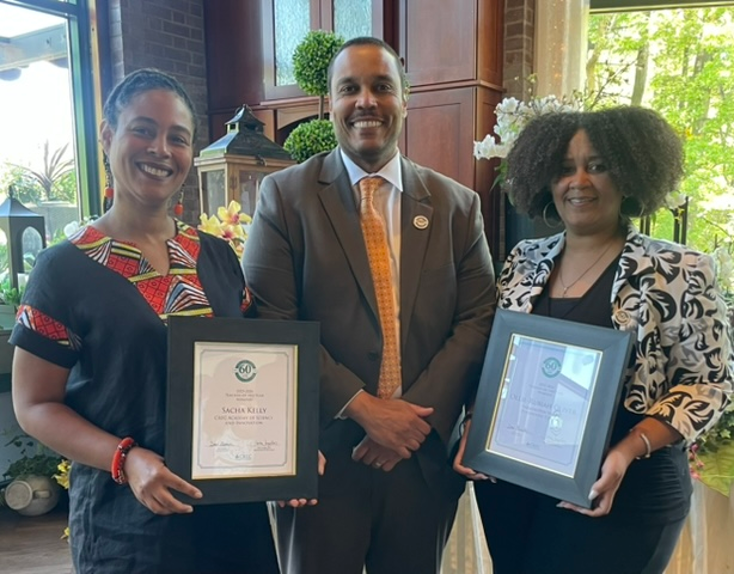
Sacha Kelly, left, and Ollie-Rubiah Oliver, right, with Desi Nesmith.
The Capitol Region Education Council (CREC) has honored two Alma Exley Scholars as Teachers of the Year at their schools. Bestowing the honor was Desi Nesmith, executive director of CREC, also an Alma Exley Scholar.
Recognized were Ollie-Rubiah Oliver, who teaches at the Farmington Valley Diagnostic Center in Simsbury, and Sacha Kelly, a mathematics teacher at the Academy of Science and Innovation in New Britain. The Alma Exley Scholarship Program honored Ms. Oliver in 2001 and Ms. Kelly in 2008. Mr. Nesmith was honored in 2000.
Honored with 19 Other Teachers
Mr. Nesmith feted them at a luncheon at the Pond House in Elizabeth Park in West Hartford along with 19 other Teachers of the Year from CREC schools. More than 12,000 students from 40+ towns in the Hartford Region attend 22 CREC schools in Hartford and 12 surrounding towns.
“It is a special privilege to recognize two fellow Alma Exley Scholars as Teachers of the Year,” Mr. Nesmith said. “Their achievements reflect not only their individual dedication and talent but also the lasting impact that great educators have on the lives of students every day.”
Both honorees have master’s degrees from the University of Saint Joseph. Ms. Oliver has a bachelor’s degree from Temple University, and Ms. Kelly has a bachelor’s degree from Trinity College and a Sixth-Year Administrative Certificate from Central Connecticut State University.
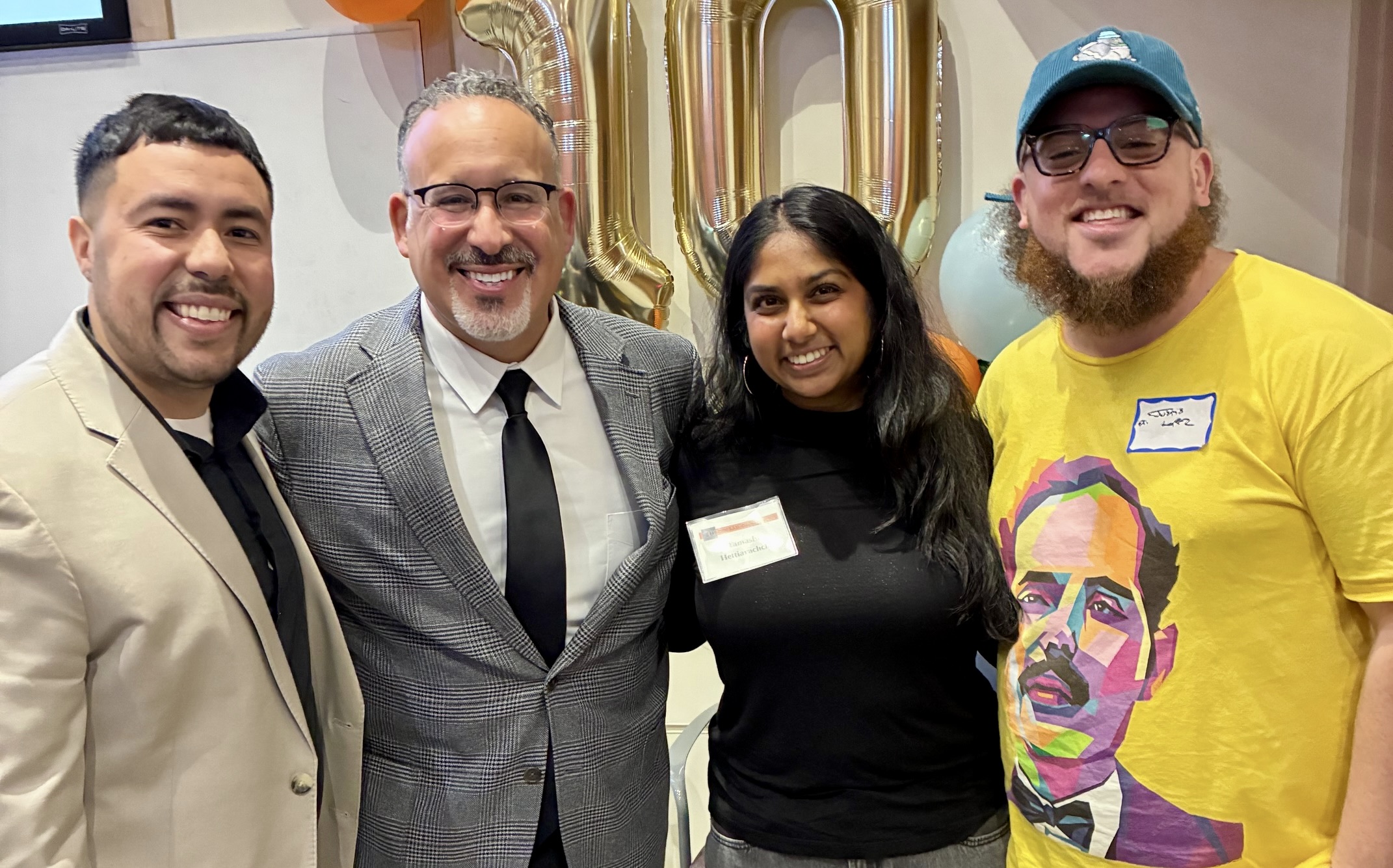
Alma Exley Scholars , together at their alma mater, from left, Orlando Valentin Jr., Dr. Miguel Cardona, Tamashi Hettiarachchi, and Dr. Justis Lopez.
“Our country’s diversity is one of its greatest strengths,” Dr. Miguel Cardona, former U.S. Secretary of Education and 1998 Alma Exley Scholar, told an audience of future educators at UConn recently. “It’s what makes this the best country in the world.”
Dr. Cardona returned to his alma mater to offer an inspiring message to students in the Leadership in Diversity organization, which aims to encourage confidence and success in students of color as they pursue careers in education.
Three other Alma Exley Scholars, all UConn grads, attended the event, Dr. Justis Lopez (2015), senior director for teaching and learning at the Hip-Hop Education Center, New York City; Orlando Valentin Jr. (2016), assistant principal at Hanover School in Meriden; and Tamashi Hettiarachchi (2022), a chemistry teacher at Hall High School in West Hartford.
More Than a Job–a Calling
“If you see teaching as an extension of who you are as a person, why you are here in this world, it will be more than a job,” Dr. Cardon said. “It will be a calling.”
Reflecting on beginning his career as a male Puerto Rican teaching fourth-graders in his hometown of Meriden, Conn., he said, “Teaching was more than a job for me. I was able to give back to the community that had given so much to me. I wanted to serve as a counter-example to some of the stereotypes that existed about people like me.
“It was important for students to see a Latino who looked like them, talked like them, ate the same food as them, and listened to the same music as them,” he said. “And it was just as important for me to have students who were different from me to learn from me. For my white students, it was important for them to learn about me and for me to learn about them.
The ABC’s of Teaching
Talking about what he called “the ABC’s of Teaching,” Dr. Cardona began with Agency, which, he said, means using your position to ensure that all students feel seen for who they are. It’s important to let students know they are welcome just for who they are and that they don’t have to change to fit into a mold.
“How fortunate are you that you are entering a profession where you can make students feel seen and loved and that they belong.”
Importance of Being an Ally
Saying that A can also stand for Ally, Dr. Cardona recalled visiting Florida when a “Don’t Say Gay” bill had been introduced. Students and teachers felt they couldn’t share if they were gay.
“I recall speaking with a teacher who had to hide a family photo because she was married to a woman,” he said. That bothered me so much that I started wearing a pride pin in my lapel. I wore it when I went on The View (talk show), and I wore it at Senate hearings.
“It’s easy to be an ally for people who look like you,” he said. “I challenge you to become an ally for someone who is different from you.”
Potential To Build Bridges
“B is for Bridge Building,” he said. “You have tremendous potential to build bridges. Campuses should be places where students learn how to coexist with those who are different and work for common goals.”
Dr. Cardona said C is for Community. “As educators, it is our job to bring community to schools. As a teacher, you have the responsibility to see that your students find value in one another.
“If you don’t see this profession as an opportunity to repair the harm caused by hate, if you don’t see teaching as an opportunity to bring out the best in all your learners, pick another field.”
Best Profession at the Best Time
“You are entering the best profession at the best time. Our country is divided. Many students feel invisible. Many feel isolated and in need of community. Your God-given purpose is to heal our country.”
Dr. Cardona quoted John Lewis, the late civil rights leader and congressman, who said, “If not us, who? If not now, when?”
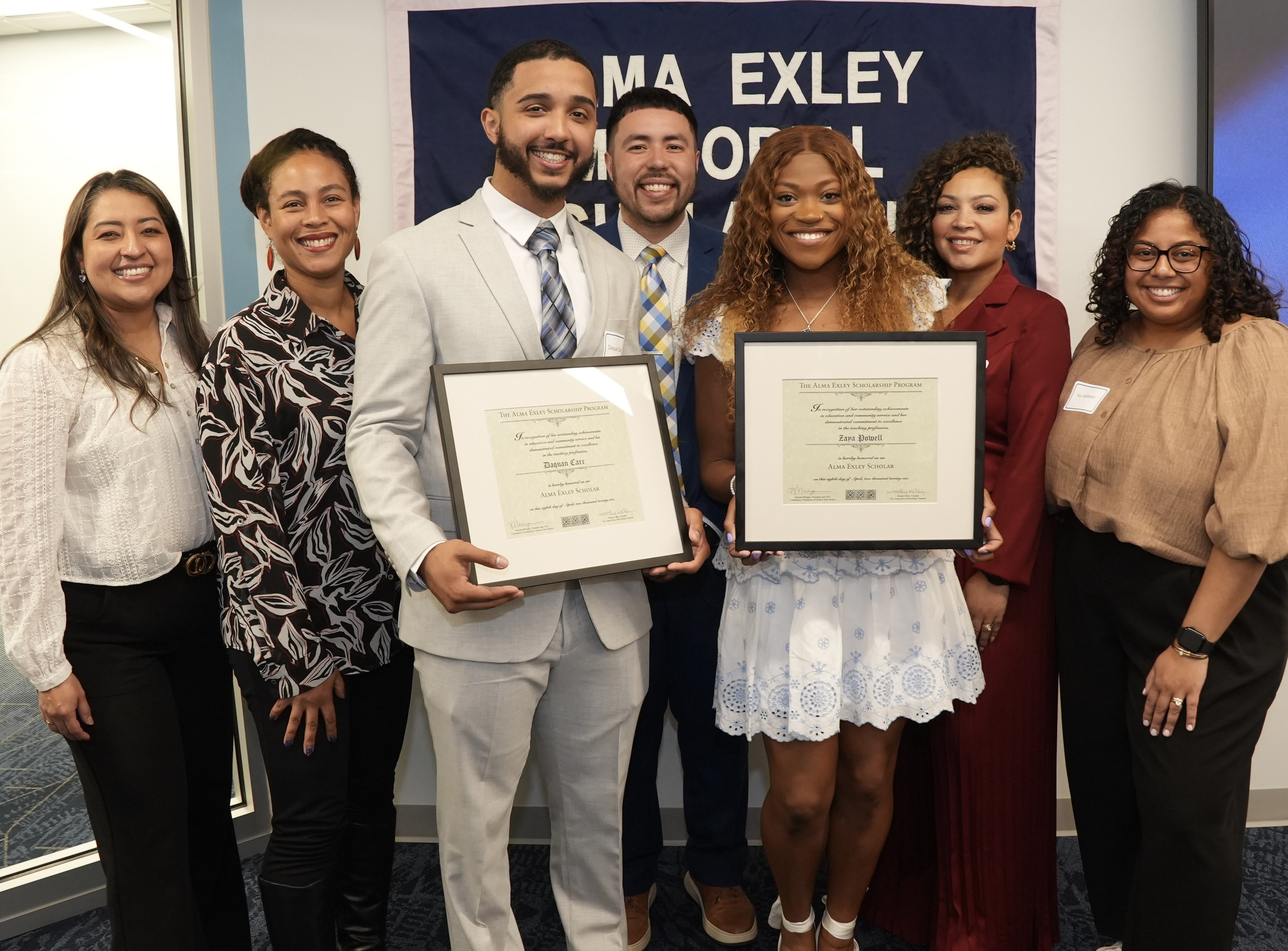
2026 Alma Exley Scholars Daquan Carr and Zaya Powell with previous scholarship recipients, from left, Verónica Alvarenga Ramos, Sacha Kelly, Orlando Valentin Jr., Dr. Violet Jiménez Sims, and Ivy Jackson.
Zaya Powell of Waterbury, a student at Southern Connecticut State University, and Daquan Carr of New Britain, a student at Central Connecticut State University, have been honored by the Alma Exley Scholarship Program.
They were feted by supporters of the scholarship program, including previous recipients, at an event at Charter Oak State College in New Britain. More than 40 attended in-person and half as many participated remotely via Zoom.
They are the 41st and 42nd students to be honored since 1995. Previous recipients are making a difference as teachers and educational leaders in Connecticut and across the country. The scholarship program is fulfilling the vision of the late Alma Exley, who had been working at the state Department of Education to achieve greater educator diversity.
CCSU Student
Mr. Carr holds a Bachelor of Science degree in Exercise Science and a Master of Science degree in Physical Education with a specialization in Exercise Science, both from Central Connecticut State University. He is enrolled in a post-baccalaureate, teacher-certification program at Central.
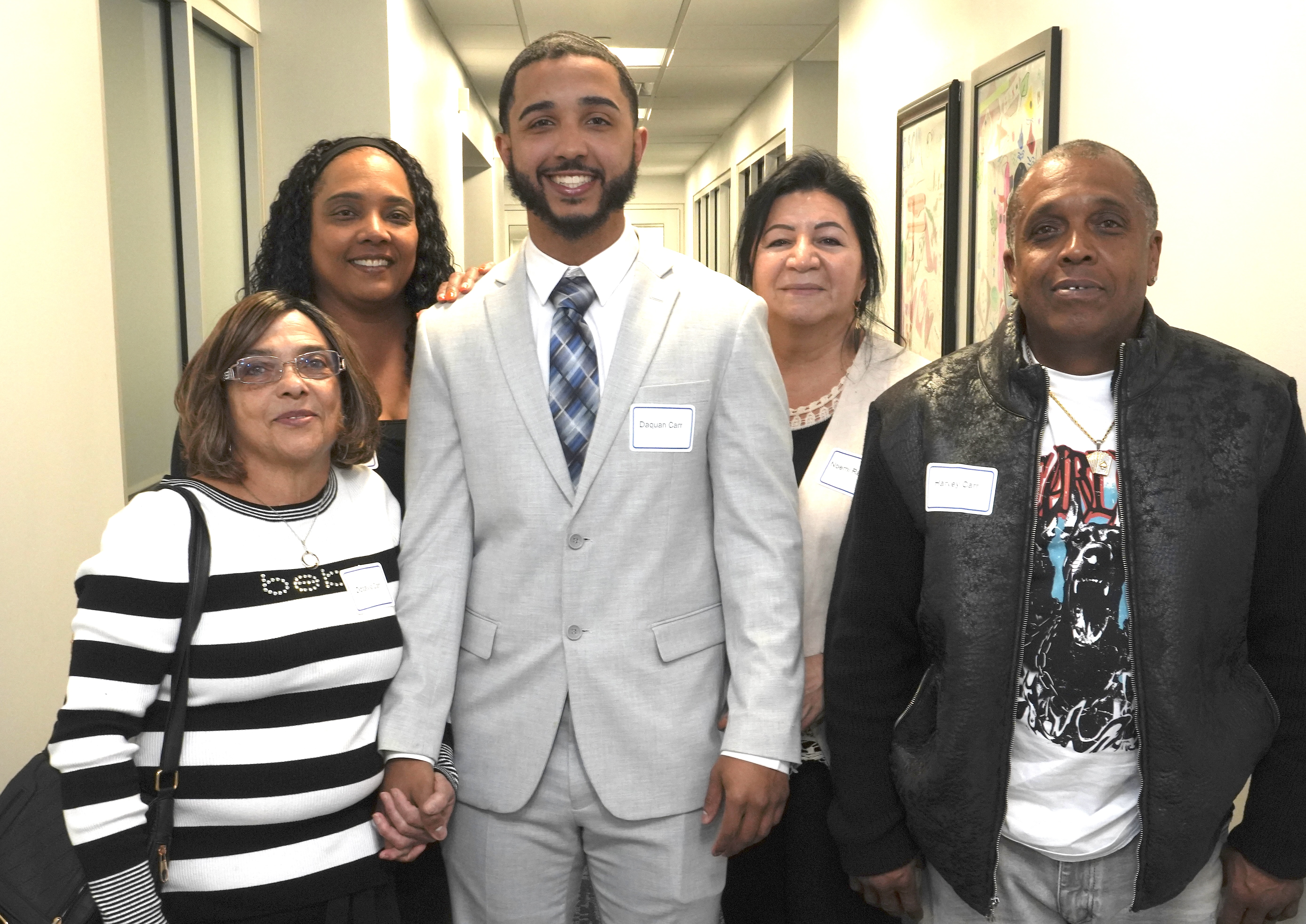
Daquan Carr with his family, from left, Octavia Carr, Monique Carr, Noemi Ramirez, and Harvey Carr.
He has a strong record of working with students and adults with physical and intellectual disabilities. As a volunteer at Savage House Gym in East Hartford, he has led fitness sessions for adults with intellectual disabilities. He has taught graduates of New Britain High School with disabilities who are in a transition program at Central.
Through programs like these, he has had an impact on a community that doesn’t have enough opportunity to enjoy movement activities with others. He recognizes that students with disabilities are often marginalized and don’t have the same opportunities for physical fitness as others.
SCSU Student
Ms. Powell is pursuing a master’s degree from Southern Connecticut State University with a concentration is science education. She’s also a registered nurse, with a bachelor’s degree in applied science from Monroe College in the Bronx. She has a bachelor’s degree with a major in chemistry from Hampton University.
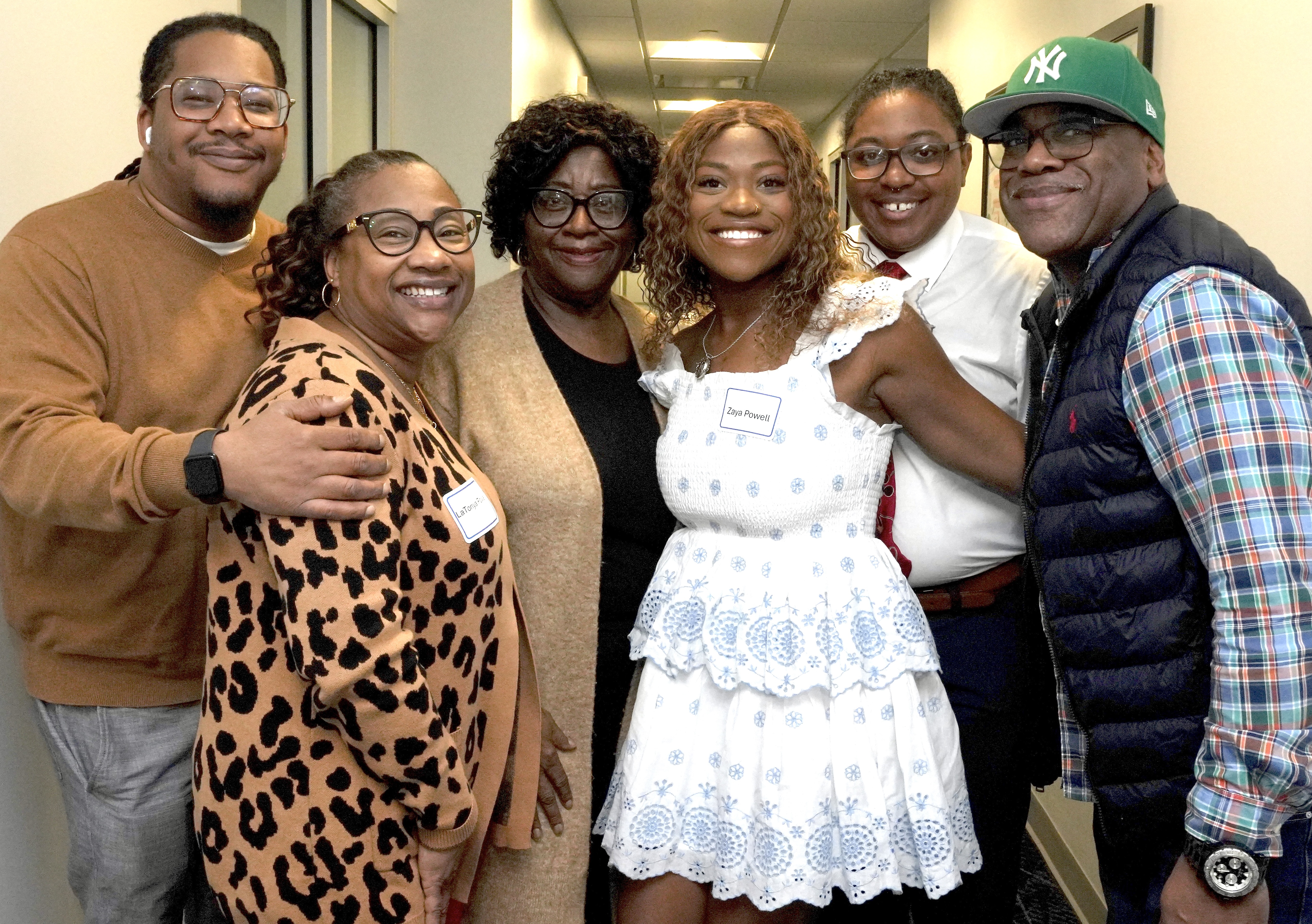
Zaya Powell with her family, from left, Darrell Powell, LaTonya Powell, Jeannette Powell, Kristina Bynum, and Devernon Parker.
She has long been involved in volunteer activities with a variety of organizations. At Hampton, she was a community organizer with the Black Leadership Organizing Collaborative. Also at the university, she tutored high school students and observed what she calls the transformative power of education.
She volunteered at St. Mary’s Hospital in Waterbury. She is a vice president with Petals and STEM, a non-profit that encourages young women of color to consider careers in science and math.
Diversity Champion
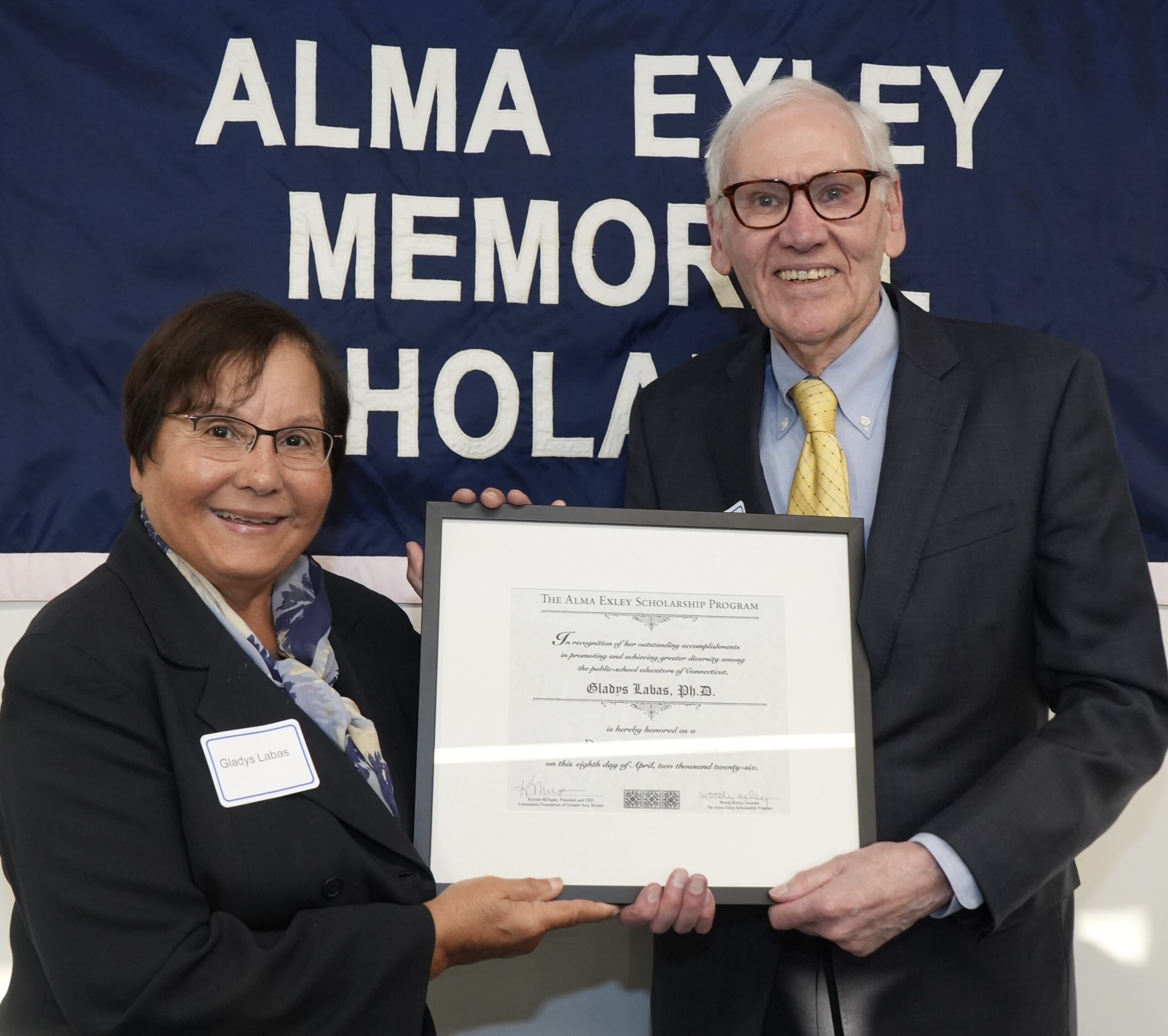
Dr. Gladys Labas was honored as 2026 Diversity Champion in recognition of her leadership in advancing equity and diversity among educators throughout the state and for her efforts to meet the needs of English-language learners.
Woody Exley presents Dr. Gladys Labas with certificate as 2026 Diversity Champion.
She has had an impact as a professor in the Department of Educational Leadership and Policy Studies at Southern Connecticut State University and previously as director of equity and language at the state Department of Education. And now she is making a difference as a member of the state Board of Education.
Throughout her career, she has been committed to advancing bilingual education. She had a big impact as co-author of Connecticut’s 1978 bilingual-education law. She led high-school reform initiatives with the Connecticut Association of Schools, serving as co-chair of the Achievement Task Force for English-Language Learners.
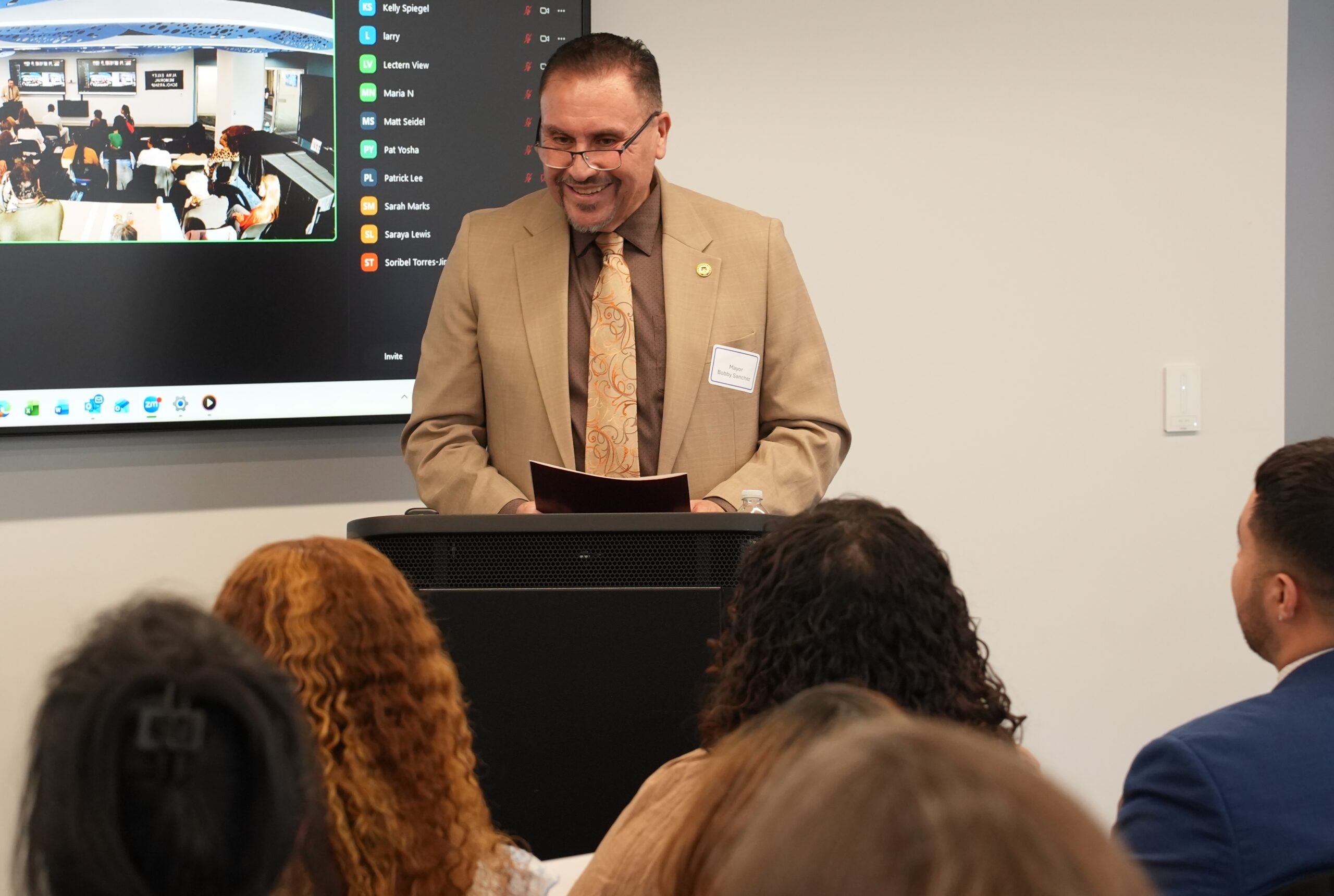
Mayor Bobby Sánchez welcomes attendees.
Mayor Bobby Sánchez welcomed the attendees on behalf of the City of New Britain. He was honored as Diversity Champion in 2023 for his initiatives during his tenure as co-chair of the State Legislature’s Education Committee.
Honoring Their New Colleagues
Previous recipients honored their new colleagues by attending in-person or on Zoom: Verónica Jazmin Alvarenga Ramos (2025), Soribel Torres-Jiménez (2023), Saraya Lewis (2022), Ivy Jackson (2019), Chastity Berrios Hernández (2017), Orlando Valentin Jr. (2016), Sacha Kelly (2009), Dr. Violet Jiménez Sims (2008), and Chi-Ann Lin (1999).
Mr. Valentin served as master of ceremonies. Ms. Kelly introduced Mr. Carr. Ms. Jackson introduced Ms. Powell. Dr. Jiménez Sims introduced Dr. Labas.
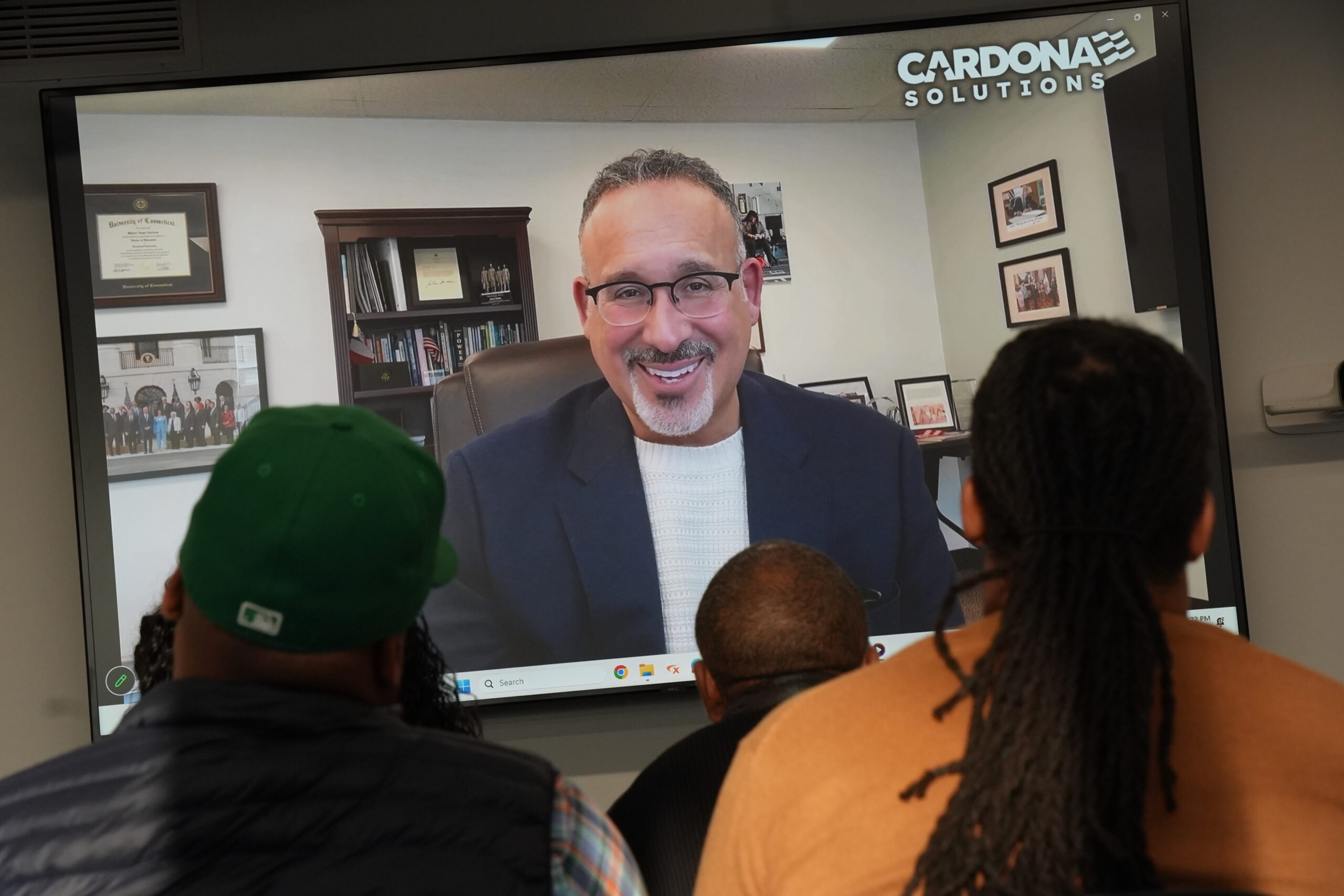
Former U.S. Secretary of Education Dr. Miguel Cardona (1998) congratulated the honorees via video.
Dr. Miguel Cardona sends congratulations via video.
Our Partner
The scholarship program is administered by the Community Foundation of Greater New Britain, “Where Good Begins” in Berlin, New Britain, Plainville and Southington. The Foundation works to inspire philanthropy, manage permanent charitable assets effectively, and partner to address key community issues through strategic leadership.