
Author Archives: Woody

Justis Lopez Full of Energy and Ideas in First Month on the Job

It’s all happening in Mr. Lopez’s classroom.

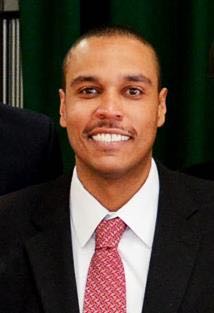
Justis Lopez is the most recent recipient of the Alma Exley Scholarship. Since receiving his master’s degree from UConn in May, he has begun teaching social studies at his alma mater, Manchester High School.

I had the chance to visit in his classroom the other day when I dropped off some books for his “Lopez Lounge.” And what I saw amazed me.

Only a few months removed from UConn, he has established a classroom that is a testament to his creativity and his connection with his students.

IMG_0303
Justis Lopez in the “Lopez Lounge”

One of his first moves upon setting up shop in Room 290 was to establish the Lopez Lounge in one of the back corners of the classroom. There’s a couch, an easy chair, a computer table, a lamp with a Tiffany-type UConn lampshade, and a bookcase crammed with books on a variety of subjects.

“Students who have a hard time sitting still for the entire period can take a break and get comfortable on the couch,” Mr. Lopez told me. “Sometimes before making a presentation to the class, they like to relax there and collect their thoughts.”

Also, Mr. Lopez’s classroom is the place to be during the school’s “Power Hour.” That’s a free period for all students, when they can consult with teachers, work on projects or catch up on their homework.

In Room 290, however, every Friday during Power Hour, it’s time for “Open Mic.” Mr. Lopez invites students from throughout the school to drop by to recite poems, rap, sing, or do whatever their spirit moves them to do in front of the microphone. In just few weeks, the Open Mic session has become a highlight of the week for many students.

Justis Lopez is well known as a showman. He portrayed Jonathan the Husky at UConn sports events during his sophomore year. He has made a name for himself as a master of ceremonies and DJ for hundreds of social events. Now he has a company, Justis League Entertainment, which provides music and photography for school functions, weddings and business events.

He brings his DJ equipment in the classroom every Friday for what he calls “Freestyle Fridays.” He does a freestyle DJ mix of music for his students as they walk into classroom to create a lively environment for learning.

With Mr. Lopez’s showmanship carrying over into his classroom, it seems there’s never a dull moment. I wish I could go back to school and take one of his social studies classes. I’m sure I’d learn a lot and have fun at the same time.

The wall behind Mr. Lopez’s desk is covered with about a dozen photographs of lighthouses. “A teacher is a lighthouse,” he said. I took that to mean that he sees himself as lighting the way and guiding his students through unknown waters on their journey of learning.

– Woody Exley
Connecticut Gives Boost to Minority Teacher Recruitment

Gov. Dannel P. Malloy has signed two bills into law to advance minority teacher recruitment and training in Connecticut.

According to a report in The Hour newspaper of Norwalk on August 8, Public Act 15-108 creates an 11-member task force to study and develop strategies to increase minority teacher recruitment and retention. The task force also will ensure that cultural competency instruction is included in teacher preparation programs and in-service training for educators.

The legislation also allows the State Board of Education to grant temporary, 90-day certificates in teacher shortage areas. And the law will enable Connecticut to enter into teacher certification reciprocity agreements with other states, making it easier for teachers from other states to earn certification in Connecticut.

Strengthening Teacher Preparation

The other law, Public Act 15-243, is aimed at improving the effectiveness of teacher-preparation programs in Connecticut’s colleges and universities.

The act requires the Office of Higher Education to submit a report on the quality of teacher-preparation programs leading to professional certification. It also revises the clinical, field or student-teaching experience requirement for teacher preparation programs.

Both bills passed unanimously in the state Senate and House of Representatives.

High Priority to Education

Jennifer Alexander, CEO of ConnCAN, a state education advocacy group, endorsed both bills.

“We are pleased that Gov. Malloy and the state legislature prioritized Connecticut students and educators this year by passing legislation that will help bring diverse and high-quality educators into our schools and prepare all our educators for the work ahead,” she said.

“Research shows educator effectiveness has more impact on student achievement than any other factor within a school’s control,” she said. “These bills go a long way towards ensuring our state is able to attract and recruit highly effective and diverse teachers and administrators and that we continue to push for rigorous educator training and preparation.”

8 Percent Minority Teachers

A ConnCAN study released in March revealed that 92 percent of Connecticut’s 36,823 public school teachers are white. The study reported that 3.5 percent of the state’s public school teachers are Hispanic, 3 percent are black, 1.1 percent are Indian and 0.13 percent are listed as other.

“Right now, the richness of diversity in our student body is not mirrored in our teacher and school leaders,” Alexander said. “Almost half of Connecticut students are students of color, but only 8 percent of our teachers and 12 percent of our administrators are people of color.”

Scott X. Esdaile, president of Connecticut Chapter of the NAACP, said, “The passing of this legislation is a clear indication that our state leaders are committed to better preparing our highly qualified teachers for the job ahead and enhancing the educational experience for all our students.”

Desi Nesmith Plays Key Role in Bloomfield Schools’ Turnaround

It was a pleasure to read about the dramatic turnaround in the Bloomfield public schools. And it was extra special to recognize that one of our scholarship recipients has played a leadership role in this achievement.

Several years ago, the situation in the Bloomfield Schools was bleak. Test scores and graduation rates were low. Only half of the high school’s graduates enrolled in two- or four-year colleges.

The predominantly African-American school system offered a stark example of the achievement gap affecting minority and low-income students in Connecticut and throughout the nation.

Now, the picture is much brighter. According to an article by Robert A. Frahm in the CT Mirror, the dramatic improvement in academic performance in Bloomfield has captured the attention of state officials and education reform organizations.

Last year, 71 percent of 10th graders met the state proficiency standard on a statewide mathematics test, compared with 46 percent in 2011. And 89 percent of sophomores met the state standard in reading, up from 62 percent in 2011.

Bloomfield High School’s four-year graduation rate improved to 90 percent in 2014, from 74 percent in 2011. Last year, 72 percent of high school graduates went on to two- or four-year colleges, compared with 51 percent in 2009.

Dramatic improvements also have been accomplished in the lower grades, where 2000 Alma Exley Scholar Desi Nesmith has been a key leader.

desi portrait
Metcomet Principal Desi Nesmith

In 2011, Mr. Nesmith was named principal of Metacomet School, one of two elementary schools in town. He was selected by James Thompson Jr., who had been named superintendent earlier that year.

Dr. Thompson had been hired to lead a turnaround in Bloomfield, based on his leadership record in the Hartford Schools. He had a vision of higher academic performance in Bloomfield, and Mr. Nesmith shared that vision.

James Thompson1  mug
Dr. James Thompson

Right at the start, the new principal established high expectations for academic performance at Metacomet. And his commitment to setting the bar high has paid off.

By 2013, third-grade classes had surpassed state averages in reading, writing and math on the Connecticut Mastery Test. The third-graders, almost all African-American and Latino children, far outperformed similar groups statewide. For example, 65 percent of Metacomet’s third graders met the state reading goal, compared with about one-third of minority third graders across the state.

What made the difference in Bloomfield? Dr. Thompson focused on strengthening academics, promoting good discipline and behavior, and forging ties with parents and the community. Teachers rewrote the curriculum to align it with statewide Common Core standards, and schools adopted new accountability plans.

The district started new after-school programs, added summer classes and provided additional training for teachers. Newly created school data teams regularly reviewed student academic performance.

The results caught the attention of the Connecticut Council for Education Reform (CCER), a statewide, business-sponsored non-profit group. The CCER issued a report describing the district’s reforms as a blueprint for narrowing the achievement gap.

Three years ago, Bloomfield received notoriety as one of 30 low-performing districts in the state designated for extra funding. Now, the CCER has singled out Bloomfield for making steady progress in all of its schools.

As someone who grew up in Bloomfield, attending Metacomet School in first grade, Desi Nesmith is gratified to have played a part in the resurgence of his hometown’s schools. But he and his colleagues are not resting on their laurels. They know there is much more to accomplish on behalf of the town and its students.

“We’re not complacent about it,” he said. “We’re not finished yet. There’s a long road ahead of us.”

Congratulations to Desi and all of his colleagues among the leadership and faculty of the Bloomfield Schools. Your achievement shows what can be accomplished through enlightened leadership that sets demanding goals and insists on accountability.

At the Alma Exley Scholarship Program, we have been focused on identifying committed future educators who have the potential to make a difference in the lives of their students. It’s most rewarding to see honorees like Desi Nesmith fulfilling their potential and having an impact.

– Woody Exley